Here information about the master of West-African classical percussion music : biography, concerts, recordings, ensemble performances, teaching, theoretical and practical courses, musical instruments, workshops, study travels to Guinea Conakry, development and children aid projects for Guinea Conakry — Contact to Mr. Alpha Oulare! *
Of course more* electronic or printed/scanned texts can be found than this one (by Kikoangoma — Danza y Musica Africana), mentioning Alpha Oulare & Sugé’sdebut album as musical reference for Guinean traditional Dances and Rhythms preserved; this ressource has been found by occasion recently… [Please click (what a word!) on the before currently red-colour hyperlinks!]
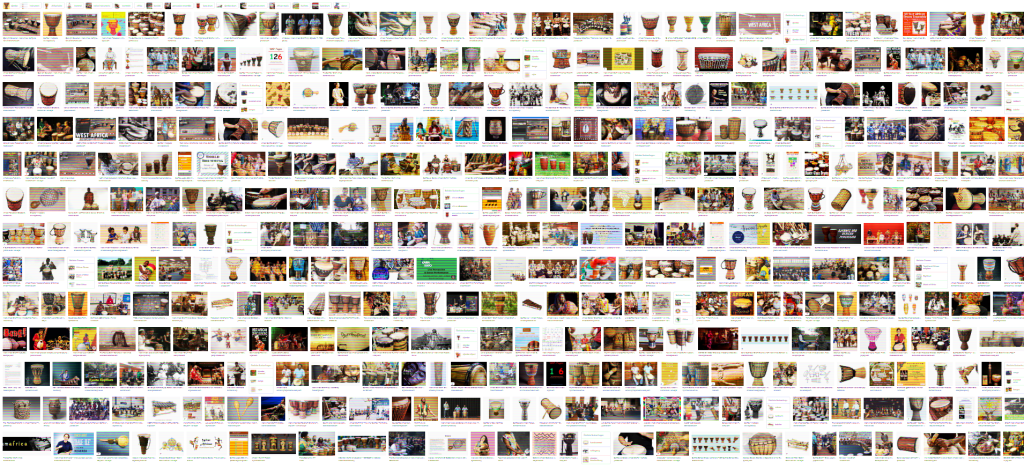
Technical issue: Using the Google Inc. Internet search
Postscriptum: * common sense (to some), that you also may try the Google Inc. Internet search to find similar Blog systems that provide information, here about West-African Percussion (click link!) — Many thanks to all contributors, all good wishes to them… (We feel links like these might be helpful to Internet readers/surfers, by this creating structures more toward a true Hypertext in global result).
(Another click above to find more images and their sources)
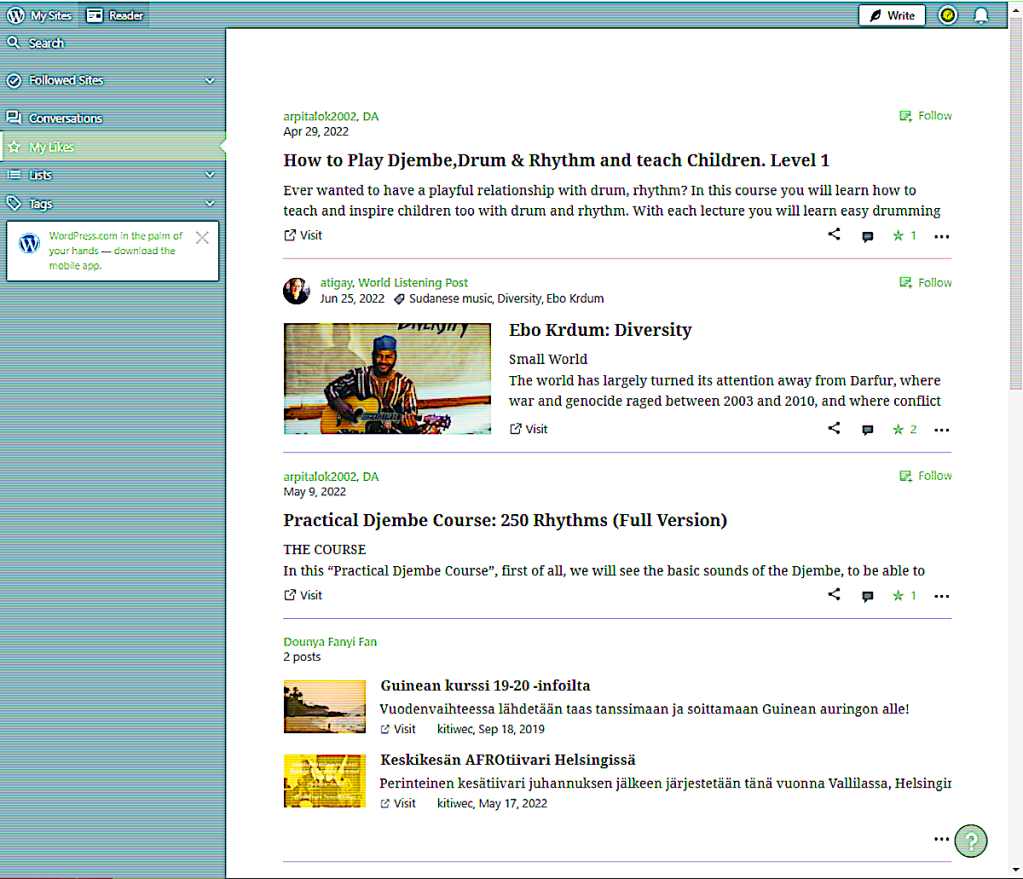
Side note: WordPress content management system (CMS)
(Surface of the WordPress Reader section)
Maybe consider also, to create an own WordPress account, or, to install as well the WordPress application also for mobile devices, this, even if it was only as reader of existing blogs, by this receiving the opportunity to submit comments, submit own searches, receive update/news notifications and more…
(Pardon us…)
*
As final contemplation watch / listen to Mamady Keïta (1950–2021): Rhythmes Traditionels di Mandingue (Traditional Mandinke Rhythms) (Beginner—Intermediate—Advanced) (200X)
We will often return to this authority, for he was one of Alpha Oulare’s important teachers and it appears to be both necessary and helpful to understand these influences of Alpha’s own music and musical teaching theory and practice.
{Mamady Keïta teaches Traditional DjembeBeginner Level. This video demonstration having been made »available to the general public so everyone searching to learn djembe from a true djembe master can have access to it. For more information about learning traditional djembe and dunun please visit [Mamady Keïta’s former] school’s website www.ttmda.com [Tam Tam Mandingue Djembé Academy]« (Mamady Keïta’s and heirs’ Google Inc. YouTube channel). May he rest in peace / may he not become forgotten! The tutorial contains these rhythms: Fankani (at 11’10”), Djabgbe (19’10”), Soli-rapide (26’50”), Kuku (33’25”), Mendiani (39’50”), Djaa (44’45”) and Moribayassa (at 50’30” — many thanks so to Alejandro S. for providing this first tracklist).} — You may try to download this video’s subtitles in several languages here.
[Mamady Keïta teaches Traditional Djembe Intermediate Level (same source: Mamady Keïta’s and his heirs’ official Google Inc. YouTube channel). Content: Background on the djembe, Greeting (at 3’11”), The instruments (4’26”); Kassa (5’30”): Dununs (5’58”), Djembé 1 and 2 (8’02”), Kassa ensemble (9’32”); Senefoli (11’50”): Dununs (12’19”), Djembé 1 and 2 (15’30”), Senefoli ensemble (16’27”); Sofa (18’35”): Dununs (19’10”), Djembé 1 and 2 (20’52”), Sofa ensemble (21’58”); Denadon (24’10”): Dununs (24’36”), Djembé 1 and 2 (26’09”), Denadon ensemble (27’04”); Djansa et solo (30’30”): Dununs (31’02”), Djembé 1 and 2 (33’08”), solo original (34’15”), Djansa ensemble (36’17”), Djansa solo (37’40”): Garangedon et solo (40’01”): Dununs (40’33”), Djembé 1 and 2 (42’19”), solo original (43’46”), Garangedon ensemble (45’30”), Garangedon solo (47’06”); Mendiani solo (49’20”): solo original (49’47”), Mendiani solo (51’30”); Soli-rapide solo (52’55”): Solo original (53’24”), Soli-rapide solo (55’28”); Farewell (at 57’06”) — thanks to Percussionworld for this more detailed track list.] — This video does not provide sub-titles.
[Mamady Keïta teaches Traditional Djembe Advanced Level (same source: Mamady Keïta’s and his heirs’ official Google Inc. YouTube channel). Content: Dunungbe (at 4’20”), Soliwoulen (10’40”), Tiriba (15’50”), Kalikambe (20’30”), N´goron (25’25”), Soko (31’40”), Koredjuga solo (36’30”) and Soboninkun (at 44’40”) — again thanks to Alejandro S. for providing a tracklist.] — Try to download the video’s subtitles here.
»We don’t just play the djembe to play a drum. We play the djembe to tell a story. Every rhythm has its story. It’s not enough to be technically good, but knowing the history of the rhythms you’re playing is very important. Where I come from, these stories are what we pass on from generation to generation. In the Manding tradition, we learn orally. We don’t write anything down. So we must memorize the rhythms and follow the way our Master teacher. A video can never replace a teacher. It is a tool to help students learn. It’s more of a key that helps students open the door to learning.«
›The Djembé will make you suffer, but it can show you the way to obtain knowledge of nature… To learn the Djembé I suffered a lot, but today I thank GOD, because of the Djembé I am well known in Africa and Europe.‹
›You have to always play the Djembé to get a new spirit.‹
›When I am asleep, the Djembé is in my dreams, Djembé playing then is in my blood, I will keep on playing until the end of my life.‹
Alpha Oulare
(March 2022) — MORE WAS TO SAY OR TO WRITE DOWN …
(This is just an experimental audio montage from computer-generated voices.)
ᎪᏁᎮᎻᎪ ᏅᏬᏞᎪᎡᎬwas born in Faranah from an original Mandingo family in Guinea Conakry and comes from the generation of the seventies. He started playing drum at the age of five. He describes himself: »I saw the Djembé in a dream after I had left a cultural place where I had met Ma Siré Camara. I was ten years old and I said to him that I love the music, then he told, come with me … I studied with him for five years and soon became a member of his ballet. Afterwards I joined the group Kounkouré Bamba. At first, I accompanied and later became a solo Djembé player … I then met Famoudou Konaté and Mamady Keïta. We also played with Faduba Oulare and his Ensemble in numerous traditional festivals all over Guinea.«
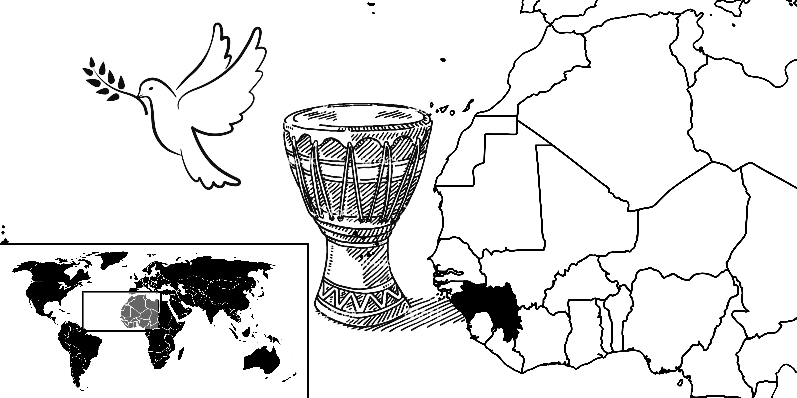
Peace shall be, the Djembé drum, West-Africa Guinea, Conakry, the World…
PUBLIC VISITOR COUNTER FOR THIS HOMEPAGE, BY REVOLVERMAPS.COM (click for details) since July 9th, 2022 — YOU ARE HERE :





 Djembéfola ALPHA OULARE / L'Institut Sunjata de famille de Monsieur Djembéfola Alpha Oulare, Guinea Conakry & Leipzig Europe (official homepages — pages d'accueil officielles — offizielle Internet-Seiten, 2022–2025ff.)
You must be logged in to post a comment.