
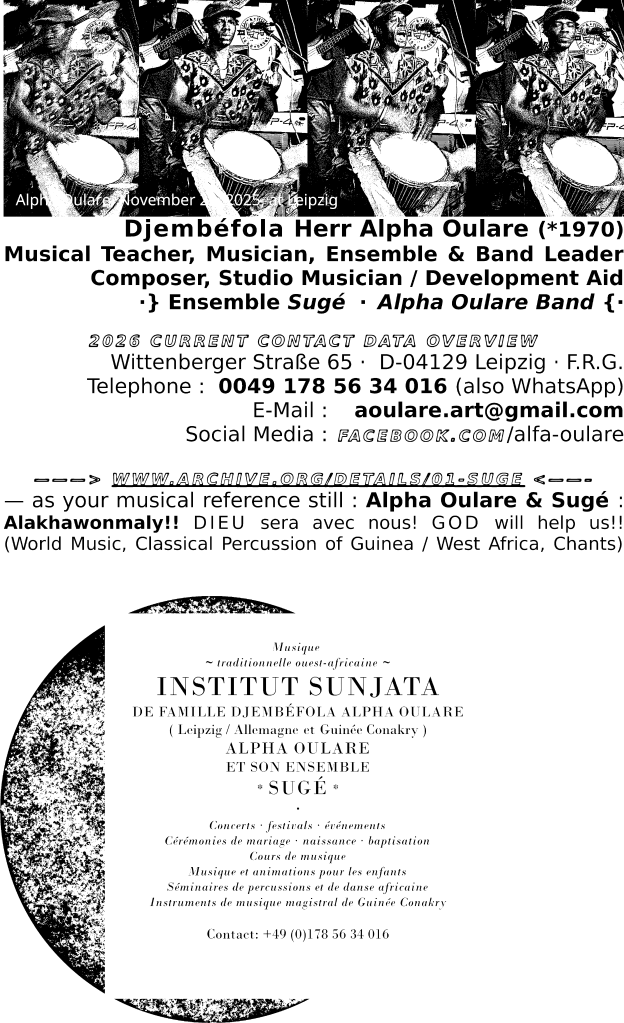

ALAKHAWONMALY!! DIEU sera avec nous!! GOD will help us!! (Echo Mix, cf. Bandcamp for the original studio version to hear and obtain as high-quality .mp3 sound files! Many thanks for your possible support of the artist.)

8.III-2026

Here information about the master of West-African classical percussion music : biography, concerts, recordings, ensemble performances, teaching, theoretical and practical courses, musical instruments, workshops, study travels to Guinea Conakry, development and children aid projects for Guinea Conakry — Contact to Mr. Alpha Oulare! *
(Prefaced: We allow ourselves, thankfully for this, the following literary reference and important recommendation, citing from another website.)
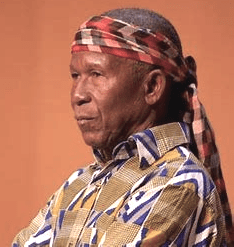
Famoudou Konaté, born in Sangbaralla/Guinea (West Africa) in 1940, is one of the most important exponents of Malinké music culture. He spent his youth as a village drummer and field worker in his birthplace. In the early 1960s, after the country gained independence, he became Ballets Africains de la République de Guinée, with whom he toured the world for 25 years. In 1986 he became self-employed and since then has dedicated himself to teaching and giving concerts. He also reconstructed the music as he knew it in his youth and saved it in a number of CD productions.
From 1997 he wrote notes on his biography, culture and music for a decade and a half, which he finally gave to Thomas Ott to make a book out of. In the end there were 700 notes to be sorted, edited and translated (from French).
The book was published in April 2021:
Famoudou Konaté: Mein Leben – meine Djembe – meine Kultur: Aufzeichnungen eines afrikanischen Musikers [My Life — My Djembe — My Culture: Notes by an African Musician]. Edited by Thomas Ott. [Translated from the French language.] Mainz: Schott Music 2021. [With illustrations and maps.] 285 pp. [Available in hardcover, paperback and as e-book.]
The editor and author Thomas Ott is a retired professor and doctor at the Institute for Music Education at from the Faculty of Human Sciences at the University of Cologne.
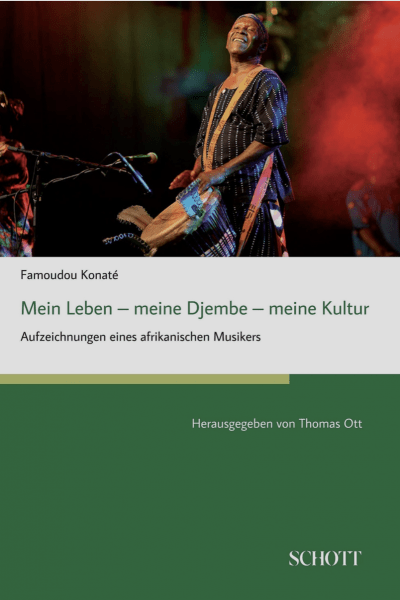
Read more…: Thomas Ott’s biographical project Famoudou Konaté
Thomas Ott: Foreword. How this book came into being [at page] 15
PART 1: BIOGRAPHY
My family 26 (My grandfather Kèkörö Konaté settles in Sangbaralla and shows great courage / The story of my parents / Memories of my mother Koriaba Fodé Konaté / My father Diouba Fodé Konaté: landowner, hunter, féticheur)
My beginnings as a drummer, childhood memories 29 (Early attempts / The djembe in my family / A “noble” cannot actually become a drummer / Songs of praise from the girls / Drumming and dancing against hunger / I help an old lady across the river / In the fields and meadows / The death of my father / History of a special rhythm: sofa / The heir: My eldest brother Malon Kèkörö Konaté)
Memories of Colonial Rule 42 (A locomotive sets fire to Kouroussa / The story of Balaké and Söna (Fodéba Keïta: “Minuit”) / The commander in the sedan chair / Forced labour / Forbidden guinea fowl hunting / Delivering rubber / A trial of my family before the colonial district court / A traumatised veteran / The colonial legacy)
My path to the Ballets Africains de Guinée 49 (My first big trip: to my brother in Upper Volta. Independence comes / I become a member of the regional ensemble in Kouroussa / I am discovered for the Ballets Africains / High demands on the ensemble members)
My travels with the Ballets 52 (Fascinating new worlds / Mysterious and frightening: flying)
First trips to Europe 54 (Berlin: shots at the wall / acclaimed performances in Paris / French lessons / London: meeting the Beatles / Prague, Budapest, Zurich: we encounter fascination and fear)
Travels to other African countries 60 (The beginning / In Mozambique with Miriam Makeba / Zambia: Elephant teeth for Sékou Touré / With Mobutu in Zaire and a near miss / Morocco: Princely reception by the king / Tunisia: A different Islam)
Travelling to South America 64 (Chile: We narrowly survive an earthquake / Cuba: At the 1978 World Youth Festival / Countering suspicions of espionage by singing the national anthem / Terrible turbulence in Bolivia)
Working conditions in the Ballets 66 (List of countries visited / The directors of the ballets / Catastrophic conditions in the first years / Protest in the night and cold / Poor pay, hunger, malnutrition / Redemption: We become civil servants)
A permanent problem: The eternal sexual emergency 71 (Strict ban on contact with the opposite sex / How I hid my girlfriend Nankany in the closet / President Sékou Touré and the pregnant dancer / Chercher la femme / Do African men have two genitals?)
My farewell to the Ballets Africains 74 (Small punitive measures / Growing discontent / The change of power in 1984 and the great turning point / First students from Europe / The white devils play the djembe! / Rainer Dörrer and Johannes Beer / Journey to my mother’s deathbed / Return to Conakry: a test for my German friends / There is a crisis in the Ballets / My journey to Germany in 1987 / Return and the final break with the Ballets)
A new phase in my life (The new life begins travelling with Silvia and Paul, my first CD “Rhythms of the Malinké”, my group Hamana Diara / A new task: documenting my musical culture / The Gambia and Berlin — I become a professor / Concert at the Musikethnologisches Museum in Berlin, September 2000 / Concerts in Conakry 1999 and 2003 / Trip to Israel 2001)
Particularly important friends and colleagues 87 (Silvia Kronewald / Rainer Dörrer / Gabi Happe / Noumoudy Keïta / Mamady Keïta)
PART 2: DESCRIPTION OF MY CULTURE
The Social Order in the Village 91 (The village chiefs: duuti and sotiikèmöö / Nobility, craftsmen, hunters / Griots and griots / The griots / Famous griots of the Republic of Guinea / The age groups (generations))
The festivals 106 (Significance of the festivals in social life / Sunkaro sali: the end of Ramadan / Tabaski: the festival of the sheep / Gbalan la: the millet harvest / Bara dösa: the rice harvest / Dala mön: fishing in the lake)
The masks 110 (Saints and other masks / The koma mask / The “magic” masks soliwoulén, kawa and wôlô / The social masks of the fourth generation: kondén and balanin, the mask turanin gbanan / The mask gnô kônôgbin wôlô / The mask tasaba)
Sexuality and marriage 119 (The myth of the two kingdoms / A childhood memory: visiting girls from neighbouring villages — ka a labö / Hooking up at the rhythm diaa / Sharing the bed, but no sex: child “marriages” as abstinence training / Mutual flogging for premarital pregnancy / Marriage preparations and wedding / What happens on the wedding night is nobody’s business! / The Imam gets the wife as a gift / Until the wedding, the girls are not allowed to cook / Marriage under duress / Forced marriage lives on / Marriage against the resistance of the family / The husband is to be respected like God / Respect of the children for their mothers / A permanent problem: polygamy / Neglect and bad treatment by the husband / The martyrdom of childless women / Divorce is (almost) impossible / When the husband dies … / Girls into school! / Lesbian women in the pillory)
Religion, animism, sorcerers and féticheurs 137 (What my brother Malon Sory told me about Islam / The blacksmiths prevail against the Muslims and sacrifice to the tree demon / Sacrifices and their meaning / The magic means (gris-gris) / Gris-gris are essential for survival at the gbara ceremony / Magic at a meeting of the hunters / The annual festival of the hunters / Soro, my father’s demon / My grandfather’s demon, kömö kudu nin, who loved snuff / Animal oracles of movement / My brother, Malon Kèkörö, snatches a piece of land from evil spirits / The Monday night boa / The lenké spirits help a functionary gain popularity / The féticheurs’ fight against witchcraft / Three stories of witchcraft / Good and evil féticheurs / The féticheur Frigan Douka loses his magic bells / The colonialists did not believe in witchcraft)
Customs, then and now 153 (Field work / Field work of the baratii and “field robbery” (sènè sunya) / Circumcision / Against circumcision, especially of the girls / Circumcision rituals / The tön ta game / Against corporal punishment of the children / Respect of the children towards their elders / Words of honour and written contracts / Hospitality and mutual help / Greeting rituals / Farewell songs / Honourable mention of the surname / Fear of solar and lunar eclipses / The poisoning of the river Djoliba / How the family learns of the death of an absent person / Suicide is frowned upon / Sacrifices for the dead)
PART 3: THE MUSIC
Functions of music – individual and social 169 (Music holds the community together / It is anchored in nature / It is a remedy / It helps people with disabilities / Prohibition of music in Islam: why? / How I oonce changed the mind of a Maninka Mori who was hostile to music / Does the Koran prohibit music?)
The musical instruments 173 (General / Who plays which instrument / Instruments of the griots (Jeli) / Instruments of the girls and women / Instruments of the children / An instrument of the hunters / An instrument of the féticheurs / An instrument of the warriors / The message drum kunan / The flutes tanbifule and böfule / The horns kerebudu and sulabudu / Dankaranfule, the devil’s flute / My recordings with some of the instruments)
The Djembe 192 (How the djembe was invented / How people used to get a new djembe / The different kinds of wood / The different shapes of the djembe / The ears (sèèsè) / Different skins for the djembe / The construction of the djembe — in the past and today)
Playing the djembe 199 (Playing on the Djembe / Other sounds I play / The position of the fingers to avoid pain / Blood in the urine after long drumming / Interaction of the arms / Playing sitting and standing / Four positions when playing standing / The straps)
The bass drums 204 (Origin and construction / The drumsticks / The arm movements while playing)
The rhythms 206 (What “rhythms” are and where they come from / The three basic rhythmic types / A special dunun: dunungbè / How strong men dance / Söma Sandyi versus Fabu Condé / A special rhythm: mendianèn)
The musical arrangement in the interplay 214 (The division of labour between the instruments / The instruments do not “play”, they speak / The instruments talk to each other / The common melody of bass drums and djembe / Do the bells also play a melody? / The introductions / The bloquages (“appels”) / The solos / Improvising / The Èchauffements and the relationship between solo drum, dance and song / The roulements)
The djembeföla 220 (What does “djembefola” mean / Low esteem for drummers among the villagers, patience as a virtue / With gris-gris against the competition / An alleged jealousy conflict between Mamady Keïta and me / The djembeföla and women / Drumming tricks to punish adversaries and break the resistance of the beloved / Memories of impressive colleagues / Jack-of-all-trades and specialists / The new generation / But where are the female drummers?)
Some serious advice to young djembe players 230 (Ask questions / Don’t stretch your drums too high / Play slowly. And not so loud / Remember: to make music you need a calm and rested mind / Get to know your culture / Be careful with the rhythms)
PART 4: EXPERIENCES AND THOUGHTS
Tradition, notation, learning, teaching 237 (Who invented our music? / Keeping African music / Working without a work plan / Learning by writing down and learning with the mind and body / School is important, also for later artists / Learning and teaching without pedagogy / Problems with teaching solos)
Whites and our music 241 (Music knows neither colours nor “races” / Melody in music is universal / Questions in the workshops / Studied musicians from Europe have more problems with our music than amateurs / European audiences understand our music much better today than 50 years ago / The colonisers were not interested in our culture / The djembe connects cultures / Do Africans have music in their blood?)
How Africans and whites deal with African culture 244 (Africans are careless with their cultural treasures / What is the kondén mask doing in Detroit? / Sound and film recordings, books — who got the money? / A counterexample / An unexpected windfall for drummer Soungalo Coulibaly / Bad experiences in the USA / A relief action for my home village / African musicians into the examining boards! / Concerts with African music are too loud)
Tradition and modernity in Africa 251 (Tradition and modernity — a mixed record / Why is Africa so backward? / Traditional and modern medicine / Death of an English tourist / Two ladies from Germany are horrified by Africa / Humiliation because of traditional dress / The griots only sing songs of praise / Can one live from playing the djembe? / I was born an African, but …)
Living conditions and ecology, then and now 258 (Children sing songs against deforestation / Plastic waste / Water is becoming scarce / Gorilla story / Elephant story e: The hunter Senba Faa Mamady Kourouma / Porcupine story: The hunter Bala Faa Sory Doumbouya / True story of a hippopotamus / The story of the little girl and the hippopotamus)
APPENDIX 1
List of important rhythms, with references to their mention in the text 263
Famoudou Konaté’s own compositions and arrangements (*) 270
APPENDIX 2
Explanations of names and terms that occur frequently in the text 275 (Guinee / Hamana, Sangbaralla / Mali Empire, Soundiata Keïta / Almami Samory Touré (1830–1900) / Ahmed Sékou Touré (1922–1986) / Les Ballets Africains de la République de Guinée)
APPENDIX 3
Famoudou Konaté’s CDs 282
APPENDIX 4
Literature and internet resources 283
*
(Sources: https://thomasottpages.de/biografieprojekt-famoudou-konate/ and https://thomasottpages.de/wp-content/uploads/2022/01/Table-of-contents-en.pdf retrieved from the Internet on October 7, 2022.)
*


 Djembéfola ALPHA OULARE / L'Institut Sunjata de famille de Monsieur Djembéfola Alpha Oulare, Guinea Conakry & Leipzig Europe (official homepages — pages d'accueil officielles — offizielle Internet-Seiten, 2022–2025ff.)
You must be logged in to post a comment.